Why FASD & Trauma-Informed Care Training Matters — From Lived Experience
JT
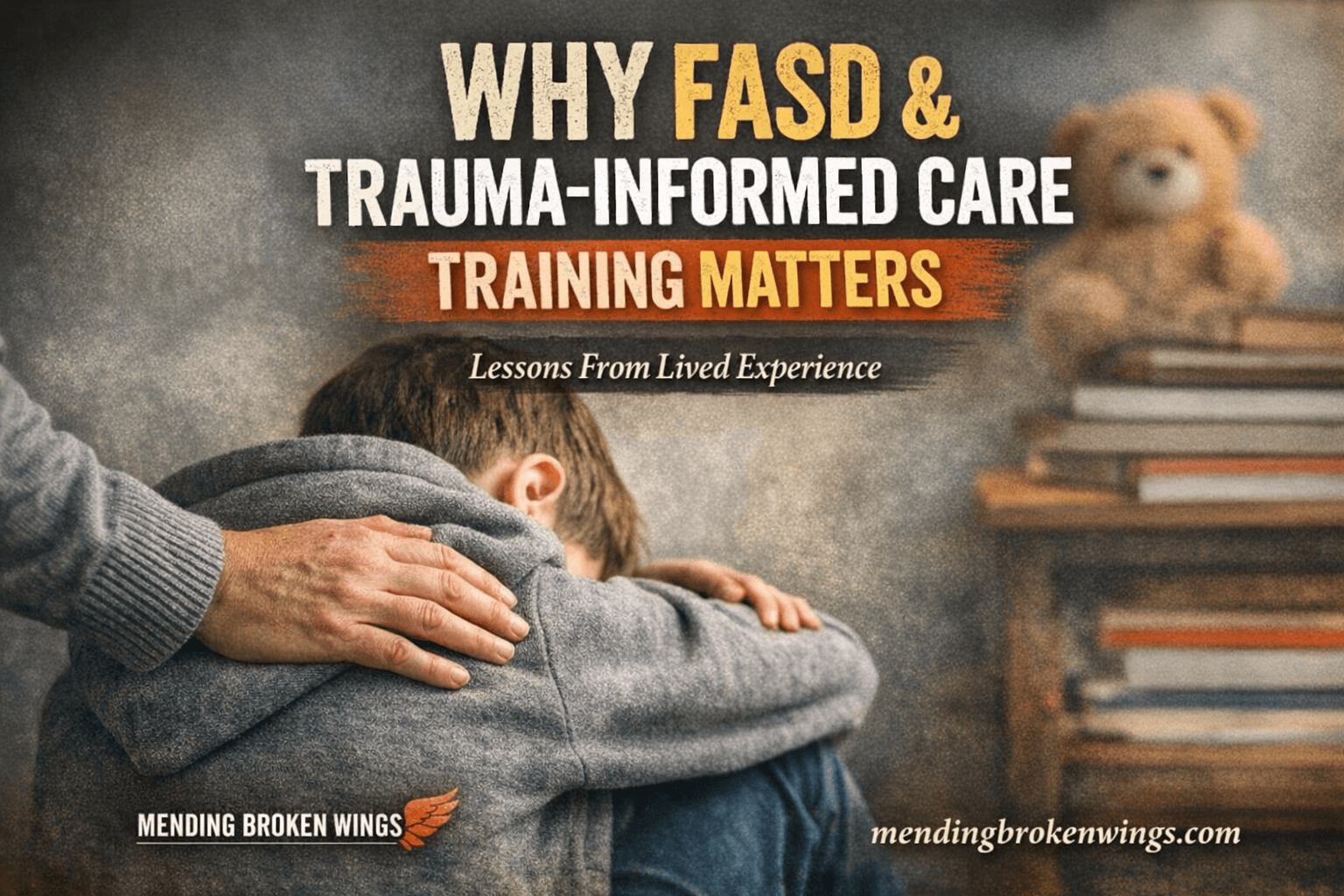
I wasn’t a “bad kid.”
I wasn’t defiant. I wasn’t lazy. I wasn’t trying to make life harder for the adults around me.
I was a child living with Fetal Alcohol Spectrum Disorder (FASD) and complex trauma and no one knew what they were looking at.
And because they didn’t know, I paid the price.
When Systems Don’t Understand the Brain, They Punish the Child
Growing up, my struggles were treated as behavior problems:
“Why won’t you just listen?”
“You know better than this.”
“You’re old enough to understand consequences.”
But here’s the truth most systems still don’t grasp:
You cannot discipline a brain injury out of a child.
FASD affects how the brain processes information, controls impulses, understands cause and effect, and regulates emotions. Add trauma—neglect, separation, abuse, instability and that brain is operating in survival mode.
Without training, adults assume choice.
With training, adults recognize capacity.
That difference changes everything.
Trauma-Informed Care Without FASD Awareness Is Incomplete
Trauma-informed care is a powerful step forward but without FASD awareness, it often falls short.
Here’s what happens without FASD-informed training:
Trauma responses are acknowledged, but neurological limits are ignored
Children are expected to “learn from consequences” they cannot cognitively connect
Support plans fail, not because families or workers didn’t care but because the approach was wrong
FASD and trauma don’t exist in separate lanes. They compound each other.
A traumatized brain with FASD:
Learns slower
Forgets faster
Overreacts more intensely
Struggles to generalize lessons from one situation to another
If we don’t train caregivers and professionals to understand this, we set everyone up to fail.
What Lived Experience Teaches That Textbooks Don’t
From lived experience, I can tell you this:
I wanted to do well.
I wanted stability.
I wanted to belong.
But the expectations placed on me often exceeded what my brain could realistically do
especially under stress.
Each time I failed to meet those expectations, the message I received wasn’t “You need different support.”
It was:
“What’s wrong with you?”
“Why do you keep doing this?”
“You’re choosing this.”
That shame sticks. And shame shapes identity.
Training changes the story children tell themselves.
What FASD & Trauma-Informed Training Actually Does
When caregivers, educators, and systems are properly trained, the shift is profound:
Behaviors are seen as communication, not rebellion
Supports are proactive instead of reactive
Expectations become realistic and achievable
Placements stabilize
Children experience success instead of constant correction
Most importantly, kids stop seeing themselves as “broken” and start understanding their brains.
That is life-changing.
Why This Matters for Foster Care, Schools, and Communities
In Michigan, foster children are removed from their homes under the promise of protection.
Yet many are placed into systems where:
FASD goes unidentified
Trauma is misunderstood
Adults are undertrained
Children cycle through placements, schools, and even justice systems
This isn’t because people don’t care.
It’s because they haven’t been equipped.
Training is protection.
This Is a Call to Learn — and to Act
If you are:
A foster or adoptive parent
An educator or school administrator
A caseworker or service provider
A church leader or community volunteer
A policymaker or advocate
You don’t need to become an expert—but you do need to understand enough to stop causing harm unintentionally.
FASD- and trauma-informed training:
Saves placements
Reduces burnout
Lowers system costs
Protects children
Restores dignity
And for kids like I once was—it can mean the difference between survival and hope.
We Can Do Better
Together
Children with FASD and trauma are not lost causes.
They are misunderstood ones.
With the right training, the right supports, and the humility to listen to lived experience, Michigan communities can become places of healing instead of harm.
That’s why this work matters.
That’s why training matters.
And that’s why silence is no longer an option.